Services/Servicios

atma

TREATMENTS

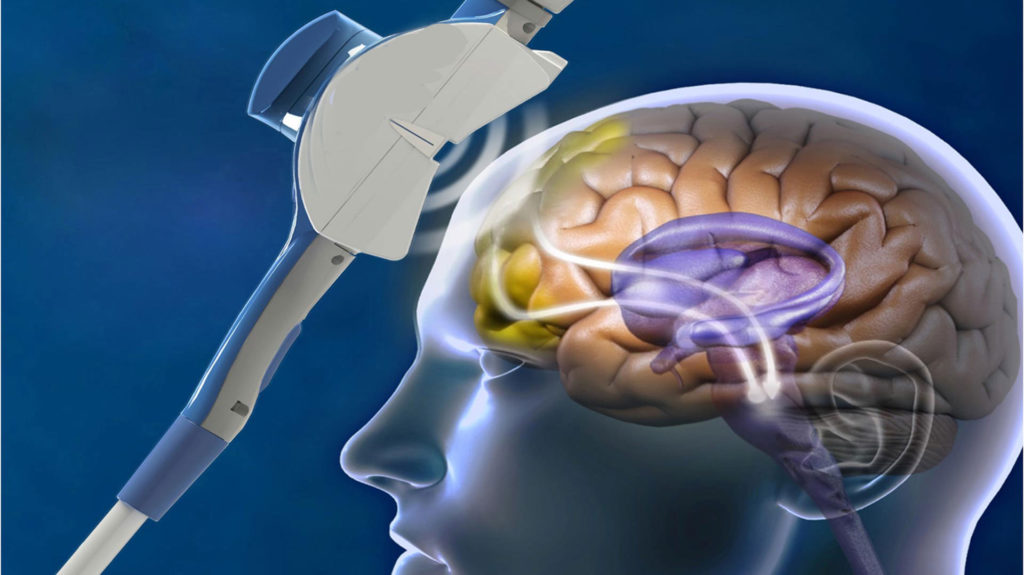
Transcranial Magnetic Stimulation Therapy (TMS)

Is a neurophysiological technique that allows the induction, in a safe and non-invasive way, that uses magnetic fields to stimulate nerve cells
in the brain to improve symptoms of various disorders.
It is performed through an electromagnetic coil that is placed on the scalp in order to achieve

regions of the brain that have decreased or, on the contrary, have exacerbated their neuronal activity.
Electrically stimulates the cerebral cortex to activate areas of the brain that are not
functioning correctly, areas of the brain that are not functioning properly.
neuronales al promover la plasticidad neuronal.
Disorders and ailments in which it can be applied:

Disorders and ailments in which it can be applied:

  • Parkinson
  • Depression
  • Insomnia
  • Vascular brain event
  • Mild Cognitive Impairment
  • Migraine
  • Autism Spectrum Disorder
  • Attention Deficit Hyperactivity Disorder (ADHD)
  • Burn out
  • Obsessive Compulsive Disorder (OCD)
  • Eating Disorder
  • Tinnitus
  • Addictions
  • Anxiety

This therapy is preferably performed on a daily basis, recommending 10 to 15 sessions, with an approximate duration of 50 minute. Previously, a psychiatric consultation is performed. It is a treatment that is performed in a comfortable space, without pain, without sedatives. In a few cases, a slight tingling in the area where it was stimulated for a few moments during or after the session.

It is a drug classified as a dissociative anesthetic commonly used in surgical procedures. In 2000, the first clinical trial was published showing that at subanesthetic doses (0.5 mg/kg), it also had an antidepressant effect. From that study, promising results have been obtained with robust and rapid antidepressant efficacy, within the first hour post-administration and up to 7 days thereafter, in patients with treatment-resistant depression and patients with depression in the context of bipolar affective disorder. These rapid and sustained clinical effects propose a novel therapeutic mechanism, opening the door for a new generation of pharmacological treatments. In addition, it has been shown that it can function as an emergency measure in patients presenting with suicidal ideation. The application of ketamine consists of intravenous administration of 100 milliliters of physiological solution containing 0.5 mg/kg of ketamine over 40 minutes. The side effects observed with the application of ketamine are headache, dizziness, dissociation, increased blood pressure, nausea, sedation. Fortunately, these effects are transient and resolve spontaneously in less than an hour after the procedure.

Current antidepressants can take weeks to initiate their effect, and even months, to achieve response and remission. It is estimated that up to 30% of patients with major depressive disorder (MDD) are resistant to antidepressant (AD) treatment, and approximately 30-45% of patients with depression do not achieve an adequate response to the first antidepressant treatment. The European Medicines Agency defines treatment-resistant depression (TRD) as failure of at least 2 different ADs (of the same or different class), with adequate dose, duration and adherence, yet without clinically significant improvement. Recently the FDA (Food and Drug Administration), which is an agency of the United States Department of Health and Human Services, protects public health by ensuring the protection, efficacy and safety of veterinary and human drugs, vaccines and other biological products intended for use in humans, has also approved this drug for the treatment of depression resistant to 2 antidepressants. The intranasal route allows drug release directly into the central nervous system, absorbing through the olfactory system and thus bypassing the blood-brain barrier, first-pass metabolism and gastrointestinal absorption, with advantages such as rapid onset of action and minimization of systemic side effects. Esketamine is administered through a single-use disposable device, preventing its subsequent use, since the volume of drug remaining is minimal.

Thanatology

Thanatology is a scientific discipline that is responsible for finding the meaning of the process of death, its rites and meaning conceived as a professional discipline, which integrates the person as a biological, psychological, social and spiritual being to live in fullness and seek their transcendence. It also deals with grief derived from significant losses that do not have to do with physical death or terminal illness. A more concrete definition is to consider it as "the study of life that includes death". From the Greek origin thanatos (death) and logos (study or treatise); therefore, the objective of thanatology is to provide professional help to the patient with a terminal illness and their families, or to a person who is experiencing some kind of loss.

The study of thanatology includes aspects such as:

  • Helping to create in people their own belief systems about life and death, not as a fantasy or punishment but as the acceptance of death as a natural process.
  • Preparing people to deal with any kind of loss.
  • Educate people to deal humanely and intelligently with those who are close to death.
  • To understand the dynamics of grief from a human point of view, where the importance of emotions is emphasized.
  • One of the the most important points in thanatology is the principle of autonomy, which allows the individual to make his or her own decisions related to the process of dying or his or her own life. The dignity of the person is understood only through respect for freedom.

When is Thanatology necessary?

  • In the face of the pain and despair of losing a loved one.
  • When a job is lost.
  • When a relationship ends.
  • Ante el dolor de sufrir la pérdida de un miembro físico (amputación) ya sea por accidente o enfermedad.
  • When suffering a material loss.
  • The pain of suffering the loss of a physical limb (amputation) either by accident or illness.
  • any other any other circumstance that generates a loss, whether physical, emotional or material. all these are losses that motivate a situation of mourning and a specialist in Thanatology can intervene to intervene a specialist in Thanatology can intervene to support the person in the handling of these situations.
Scroll to top
en_USEN